

In the summer of 2026, I was at a garage sale in my parent’s neighborhood when a rusty bit of metal caught my eye. Upon further inspection, I found it was a rusty axe with a splintered and rotten handle. The axehead was wedged on by about 10 rusty nails and screws of all shapes and sizes. Quite unfortunately, I didn’t think to snap a picture of it, but I hope this description will suffice. I attempted to pay the owner of the axe for it, but they gave me a pitiful look and refused to take my money.
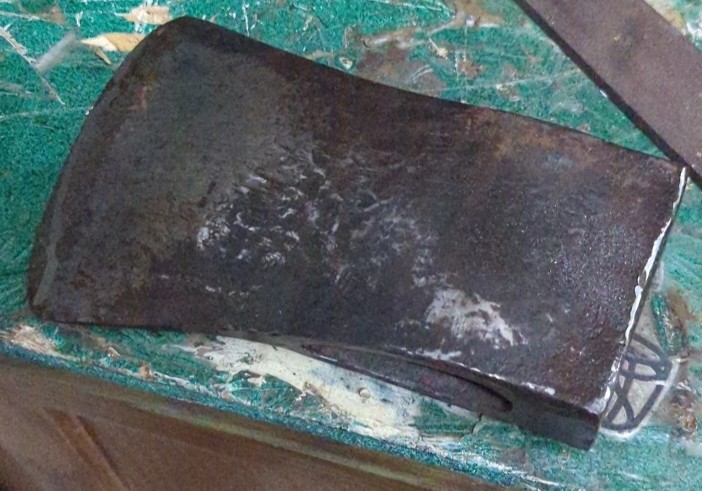
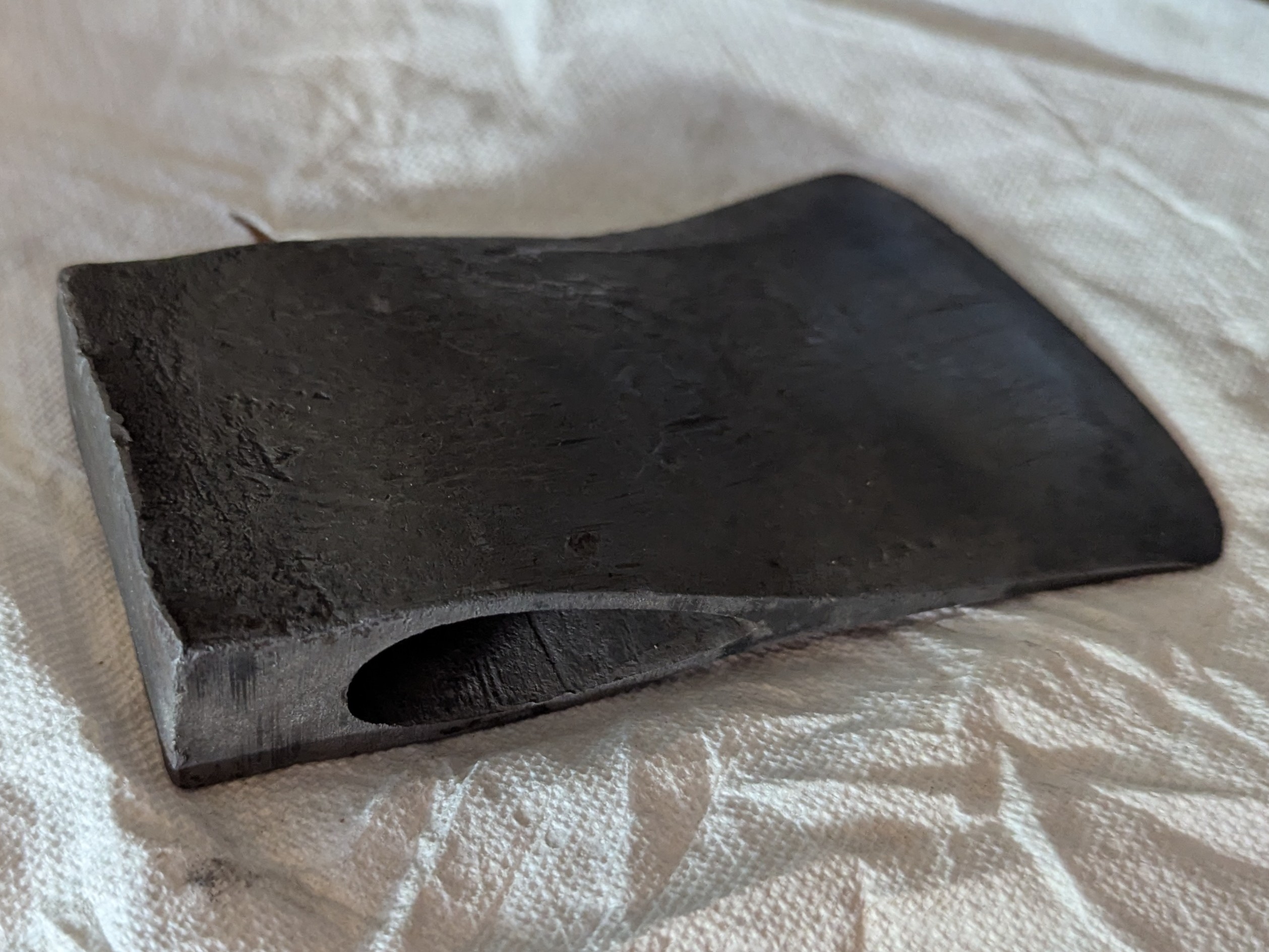
Pulling the nails and screws out of the top of the axe was incredibly difficult, due to how rusted everything was. I eventually got everything out, though, and I was left with a rusty axe head. I did my best to clean it up with my stepdad’s bench grinder, but it was too pockmarked for the brushes on the wire wheel to fully penetrate. Thankfully, I had access to a gallon of white vinegar, and so I soaked it for 24 hours. After a quick baking soda neutralization and a wash-down with the hose, I began drying and scraping gunk off of the axehead. I also applied WD-40 to hopefully get rid of any residual water pockets and protect the part from flash-rusting.
Soon after this, I got a membership with a makerspace in Boulder, CO, called Solid State Depot. They’re a great community, and if you get a chance to check it out, I highly recommend it. As a first project, I thought it would be neat to take a shot at making an axe handle. Woodworking is an area that I don’t have much experience in and would love to get better at. I called a wood supplier called Urban Forest Mill to see if they had any hardwood pieces that could serve as a handle, and I was in luck. They had a bunch of ash aft-cuts that would be perfect for my use case. I spent $13 for a 1.5”x2”x48” plank, and I have been very pleased with how the wood performs.
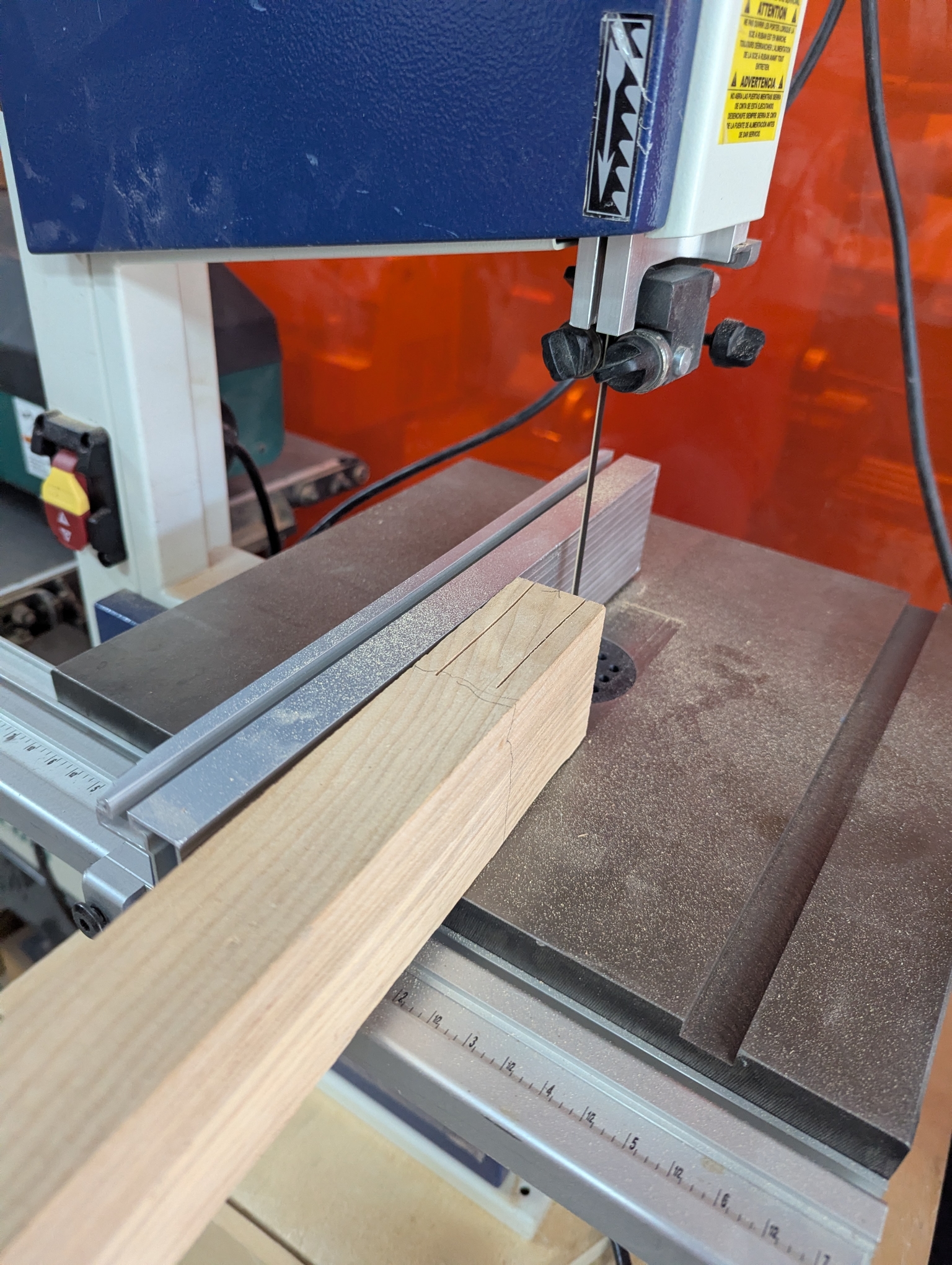
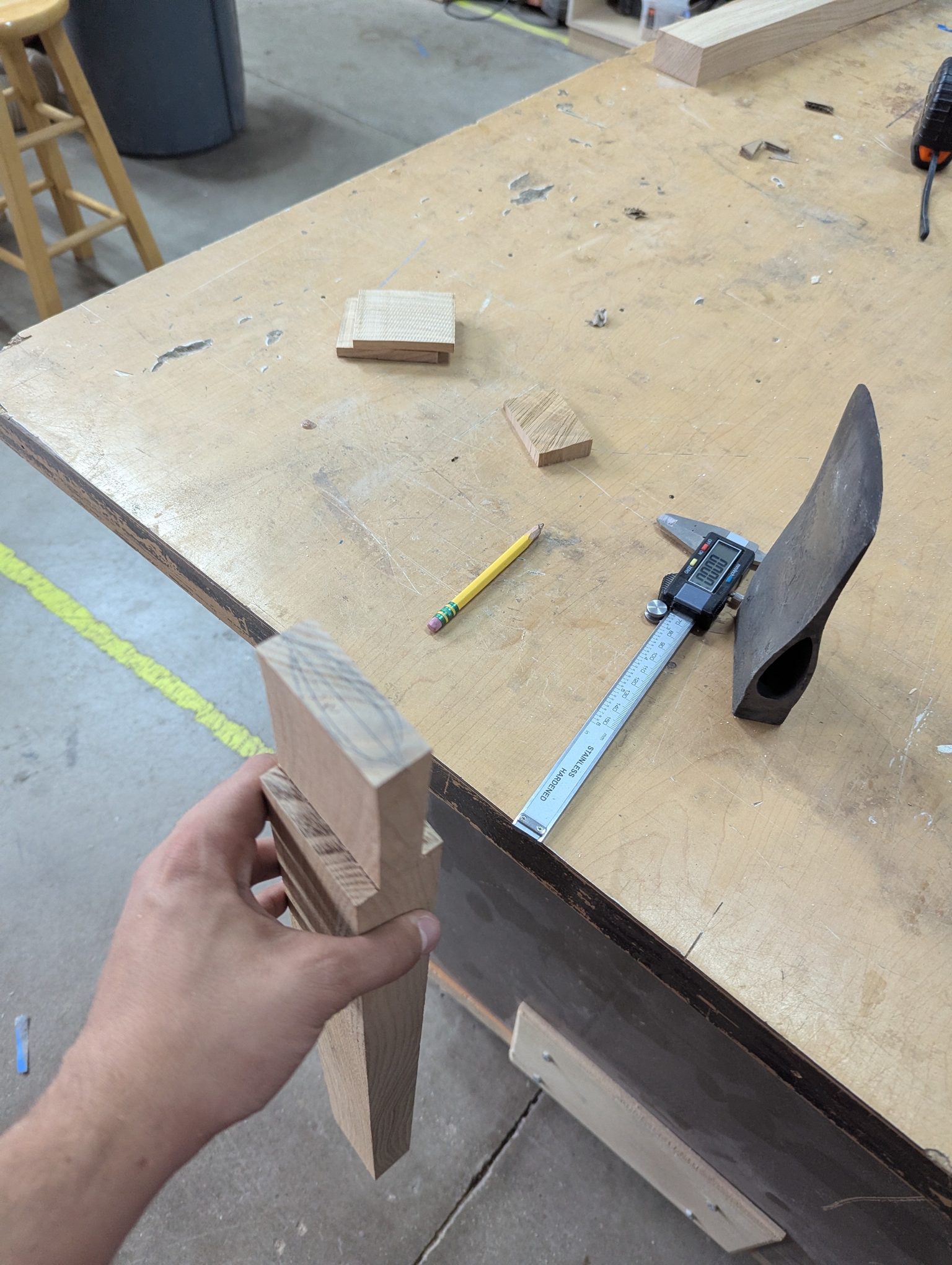
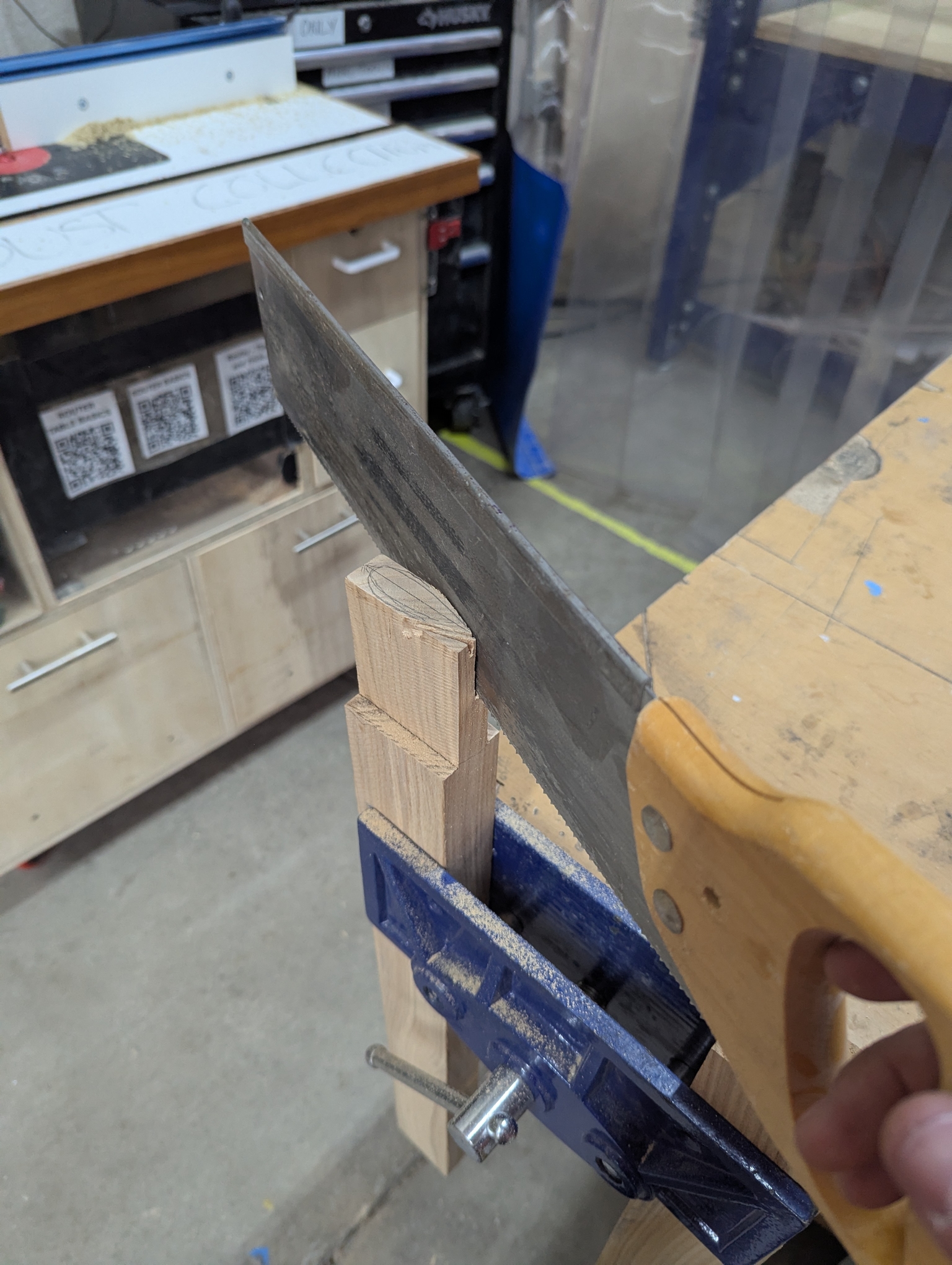
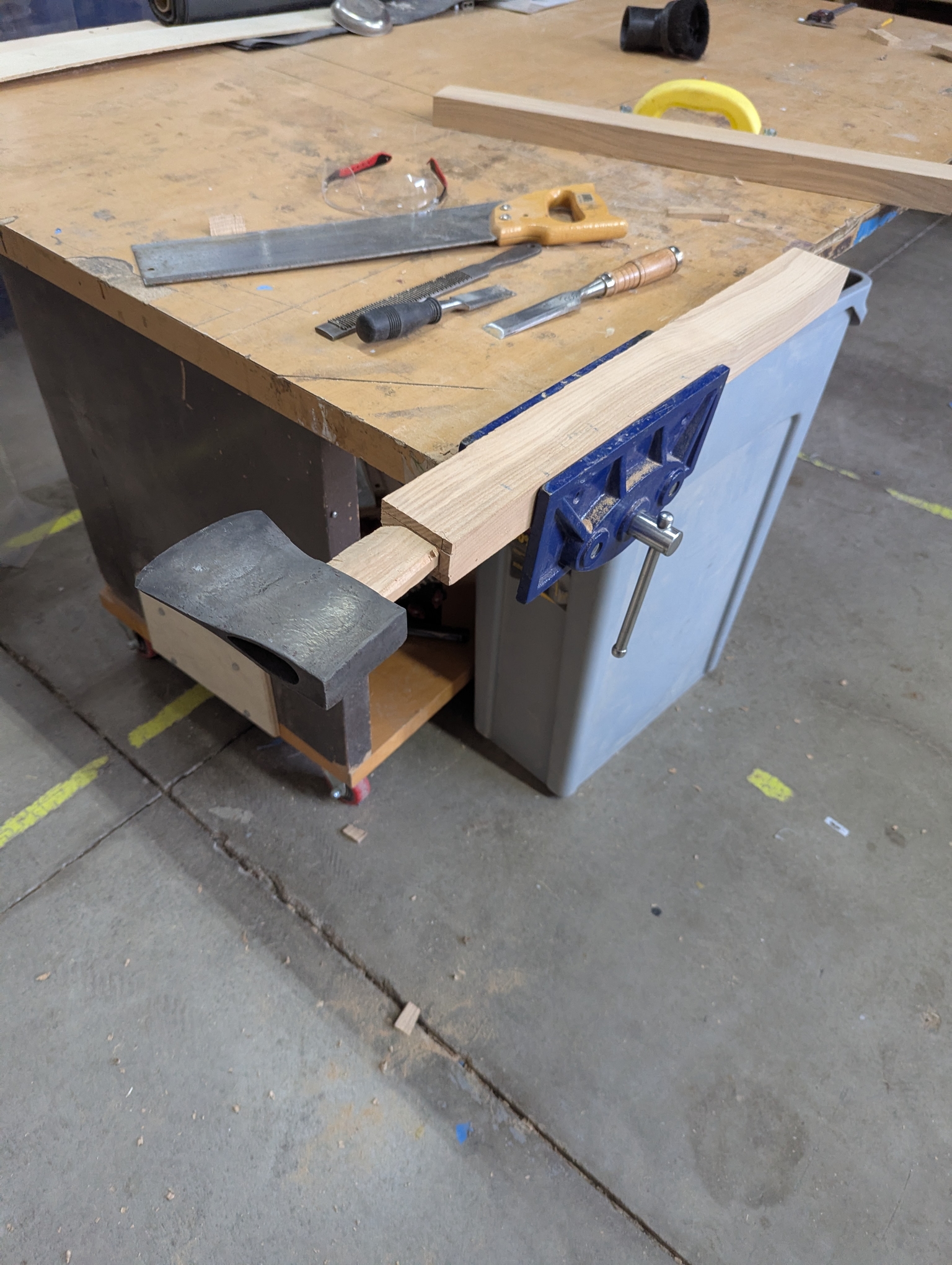
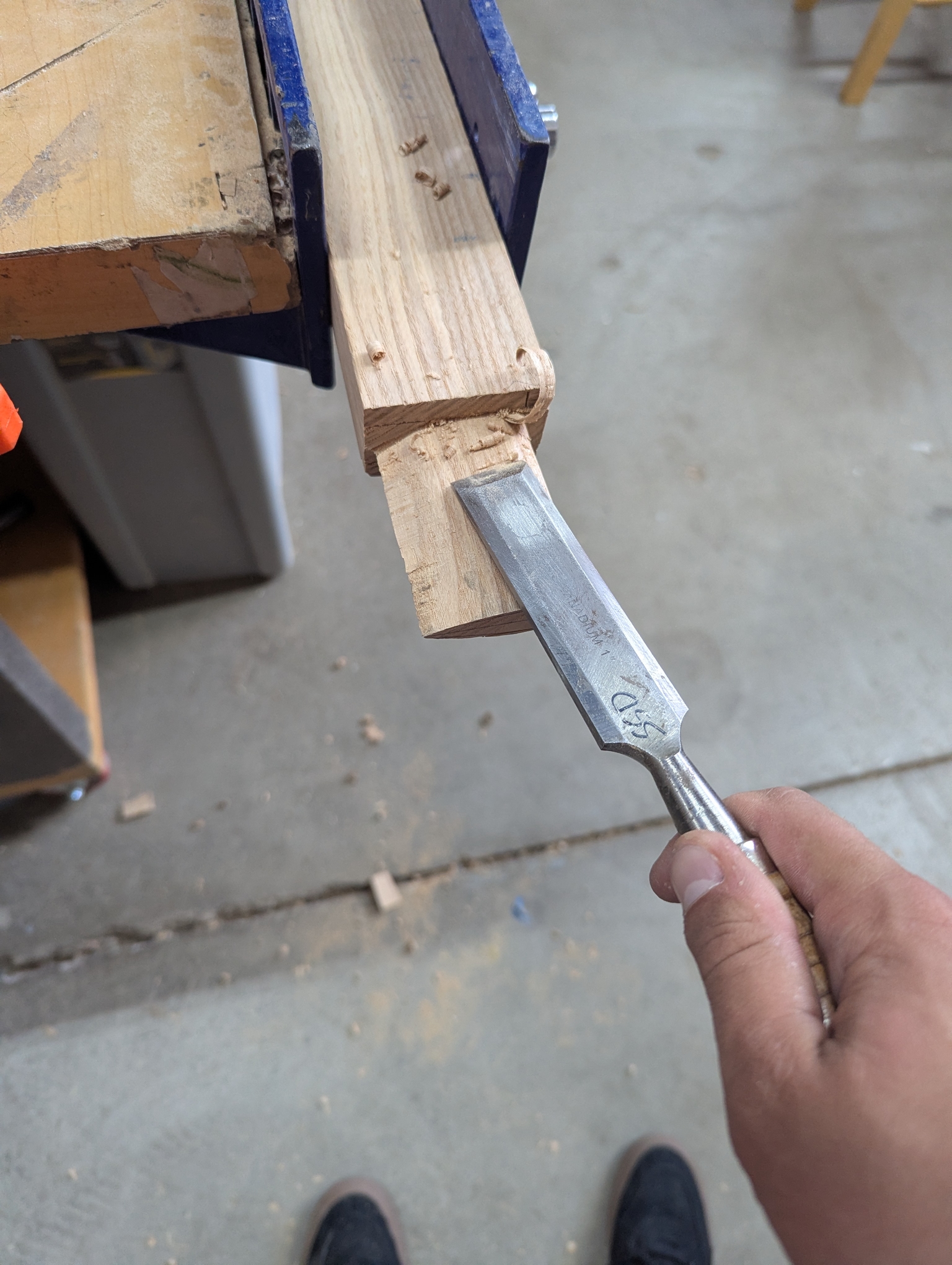
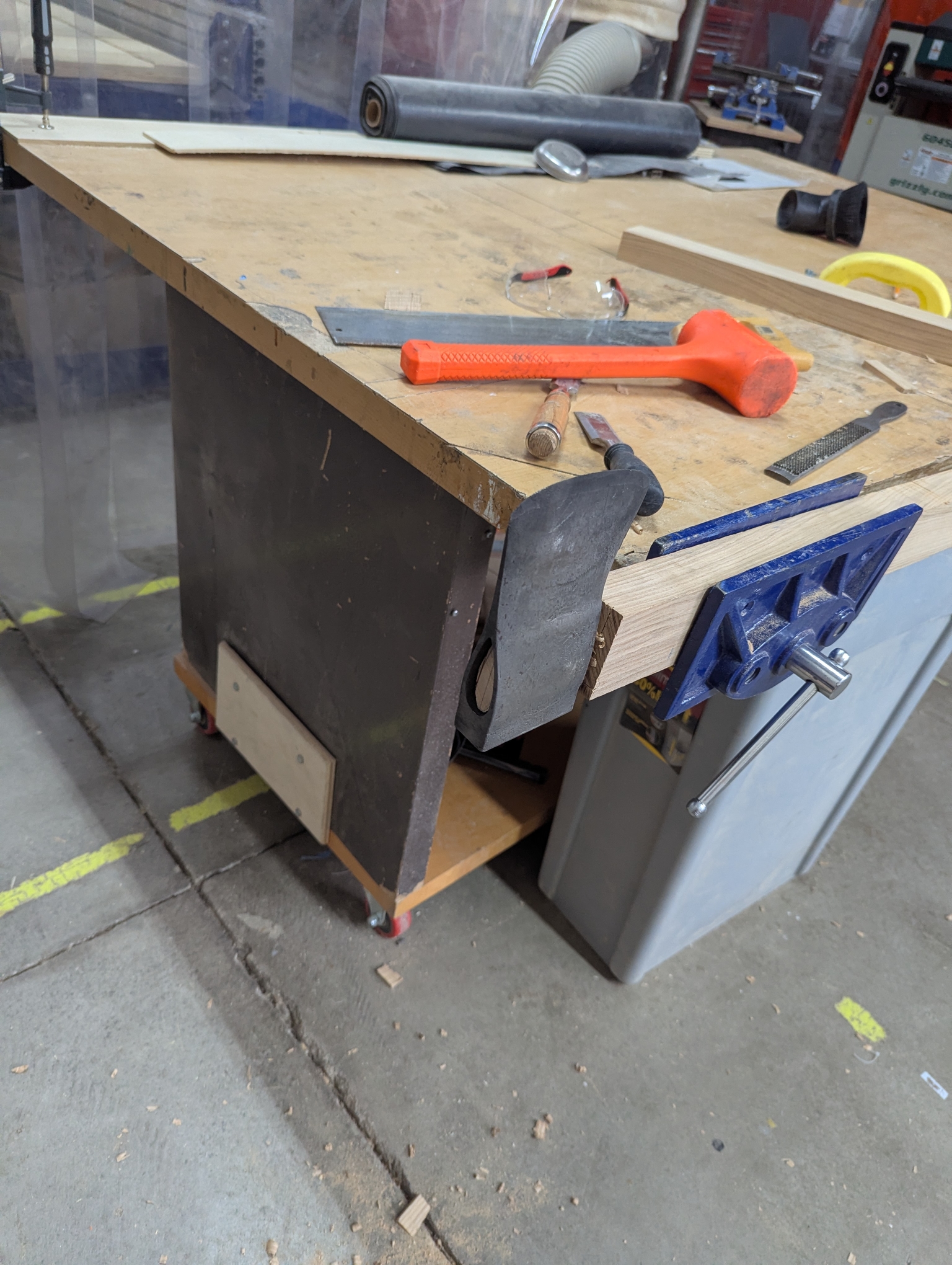
I started by weighing the axehead and found it to be 2 lbs. Gemini informed me that such a weight was insufficient for it to be a splitting maul, but it would be perfect as a felling axe, with a length of about 36”. I started with the eye of the axe, roughing it with a bandsaw, following that with a handsaw, and putting on the finishing touches with a chisel and rasp.
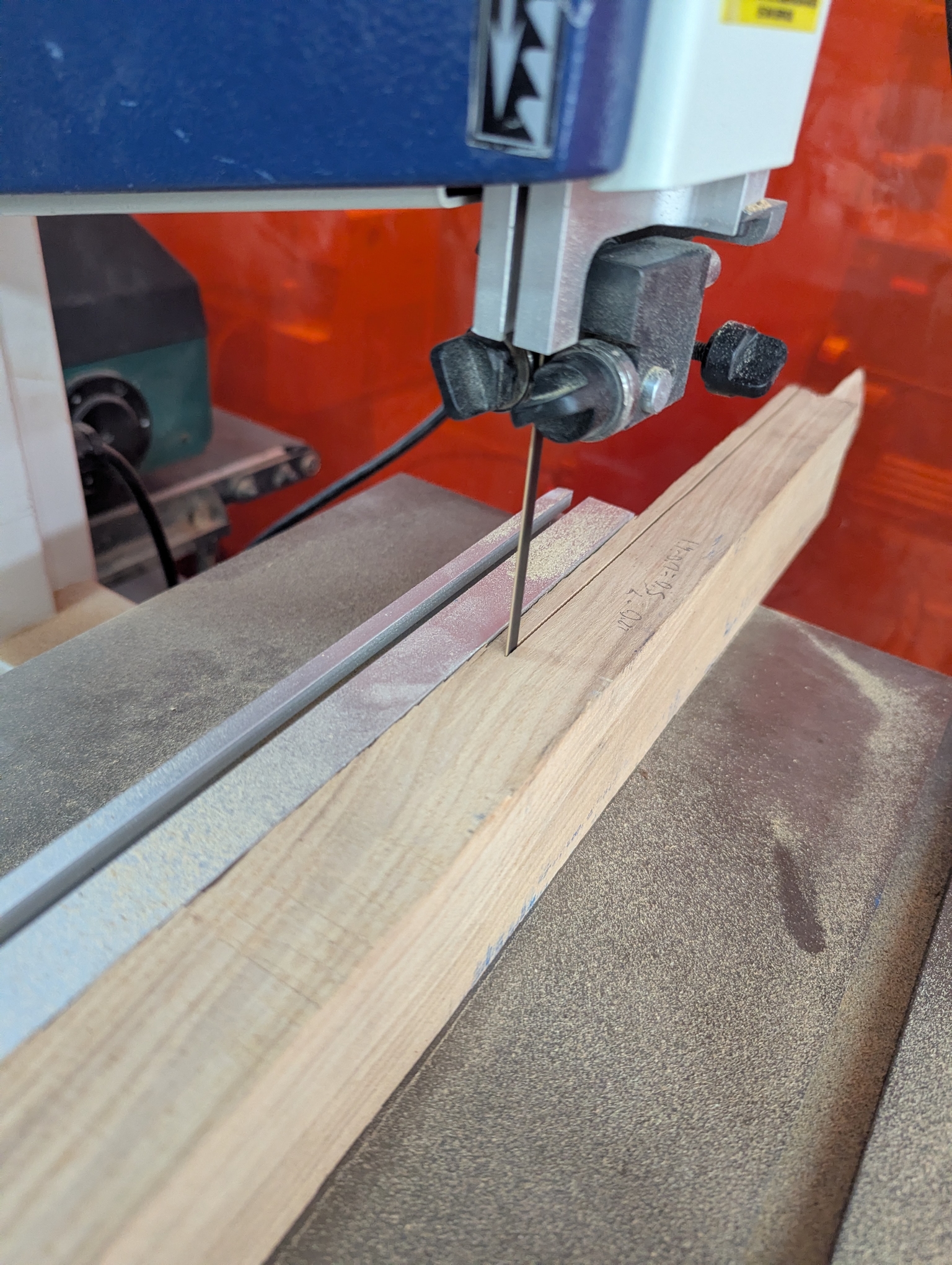
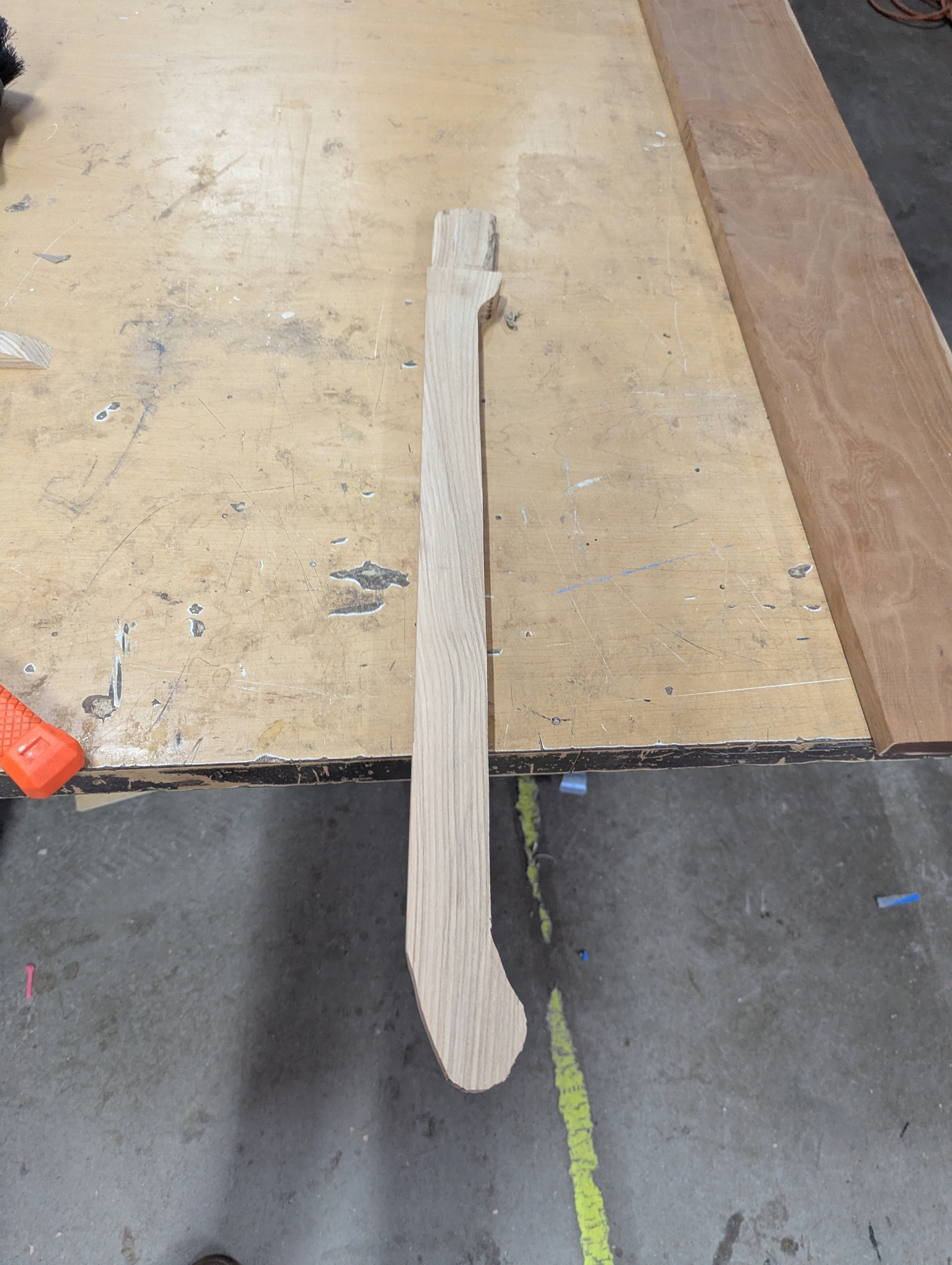
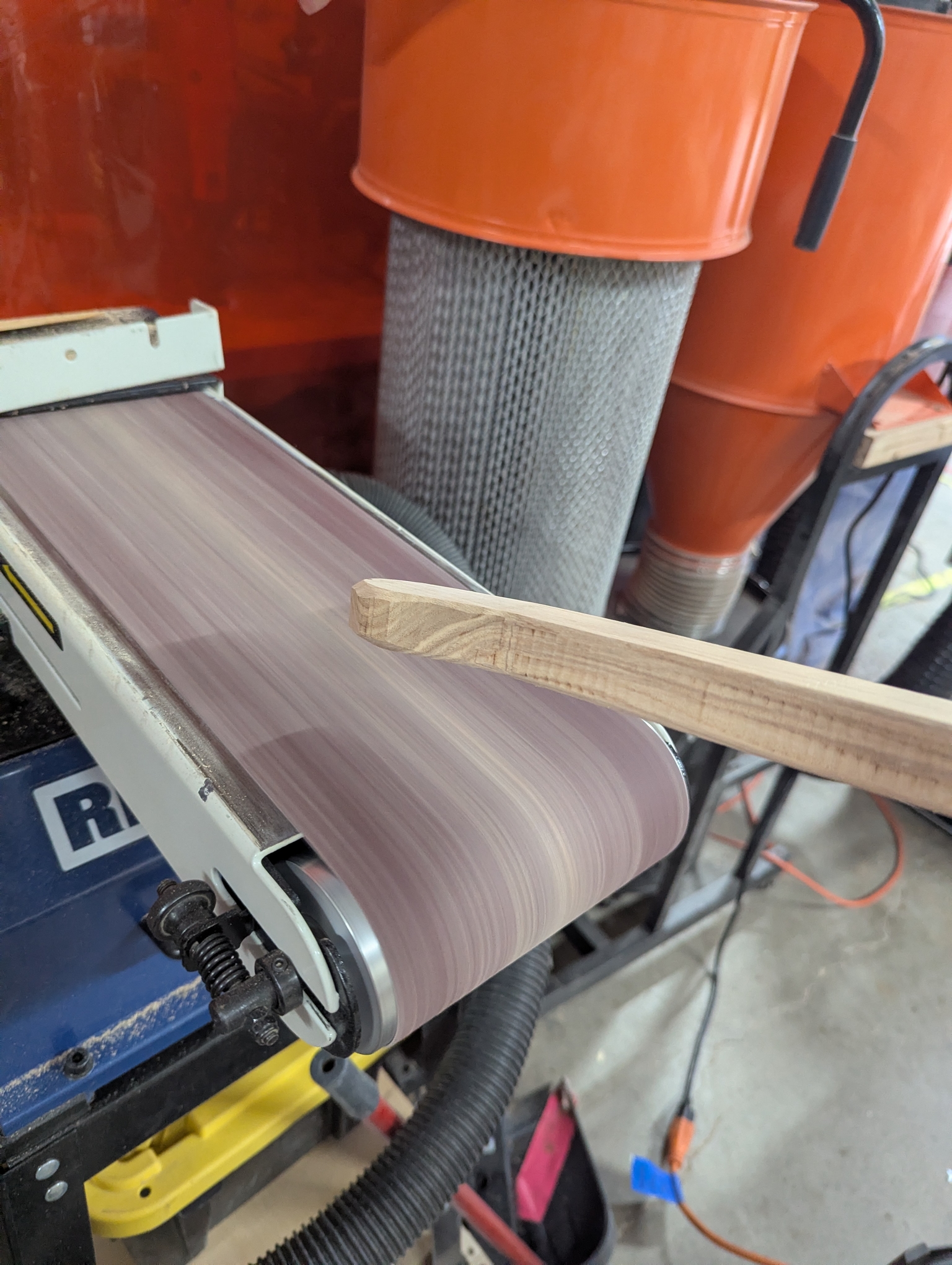
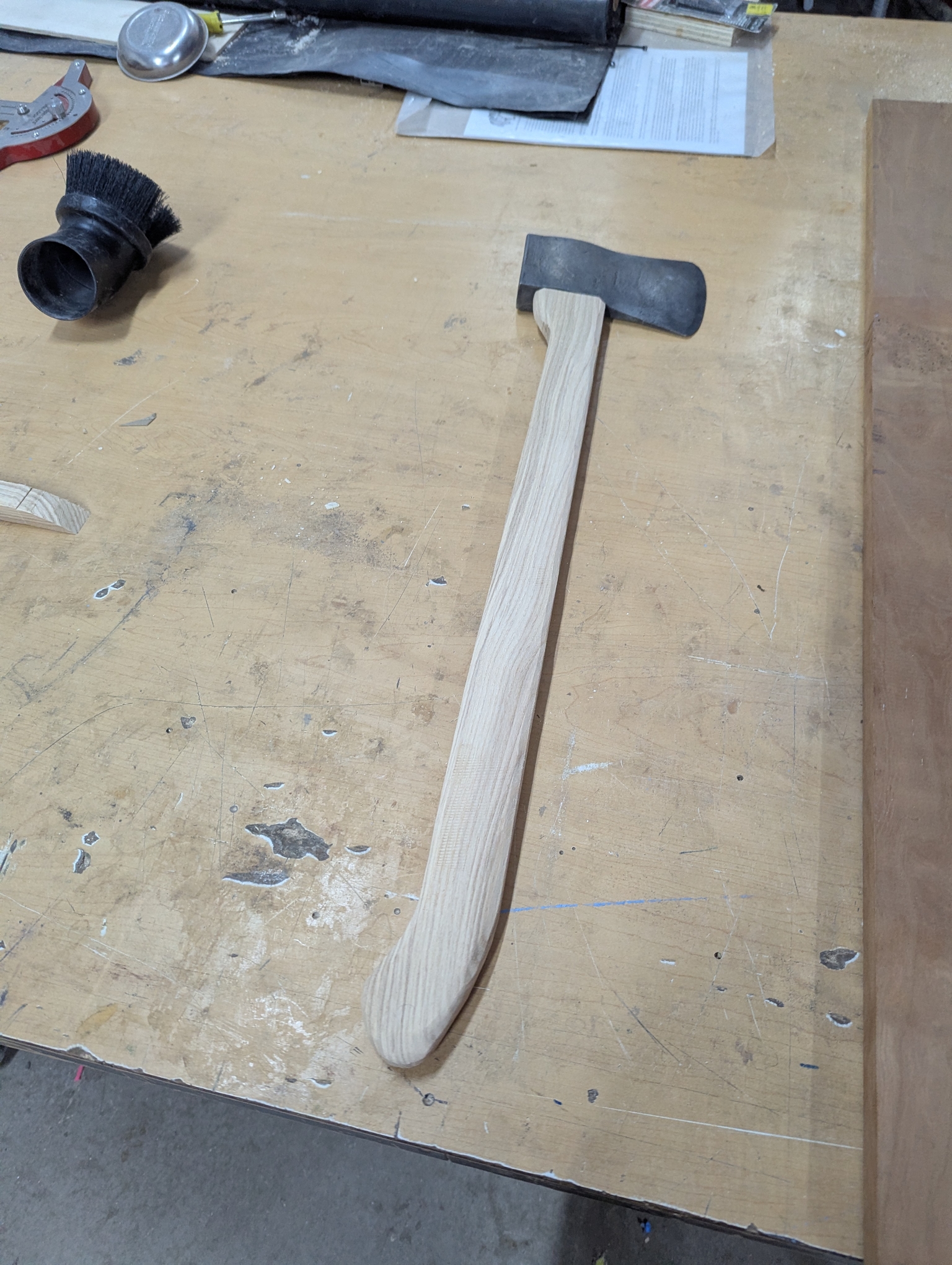
Then, I moved on to the handle. I chose a thickness of 0.8” and a width of roughly 1.5”. I began by sketching my design onto the wood with a pencil, and when that looked right, I took it to the bandsaw. Like usual, the bandsaw deflected, but I was able to clean it up with the belt sander afterward.
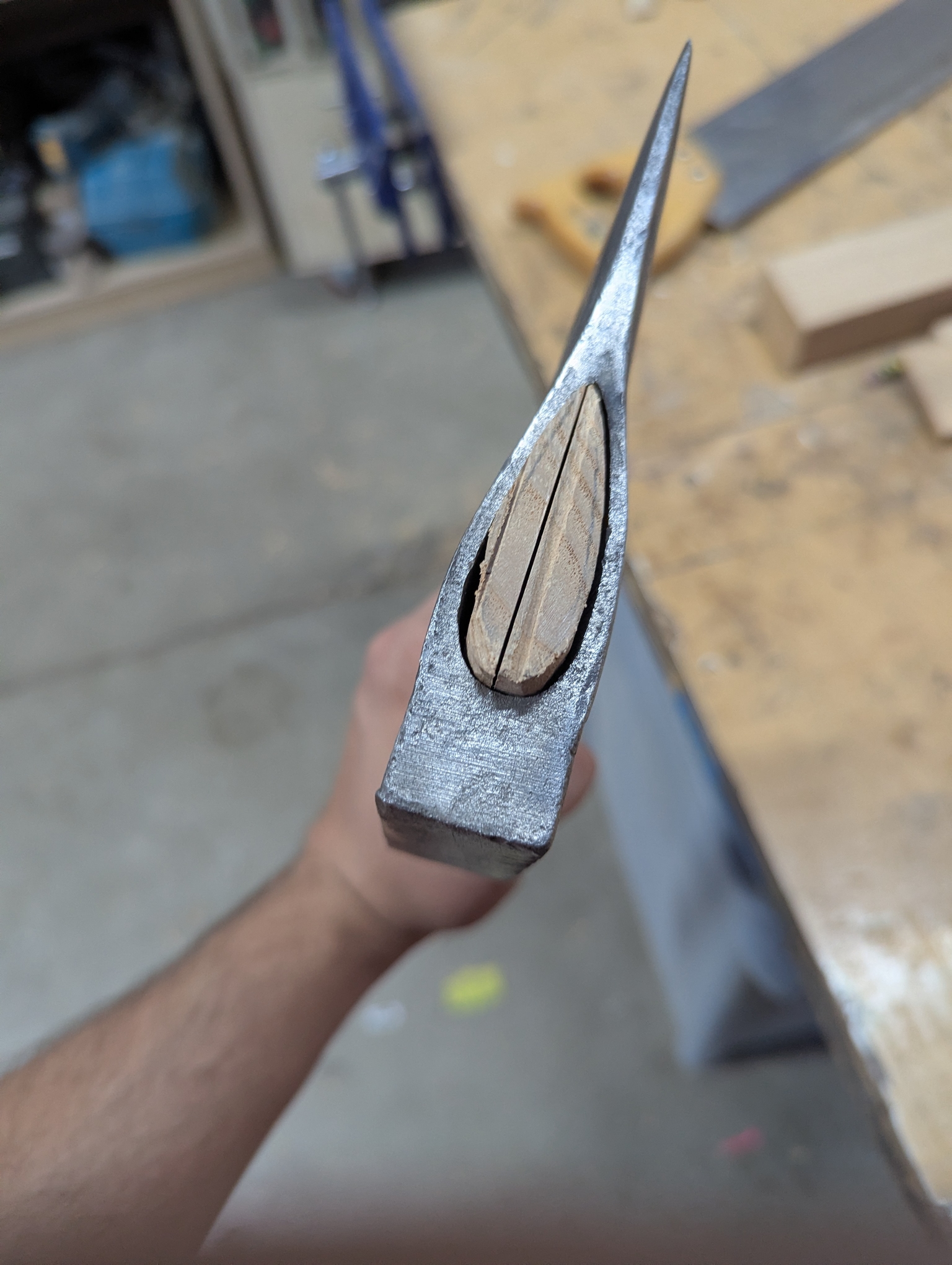
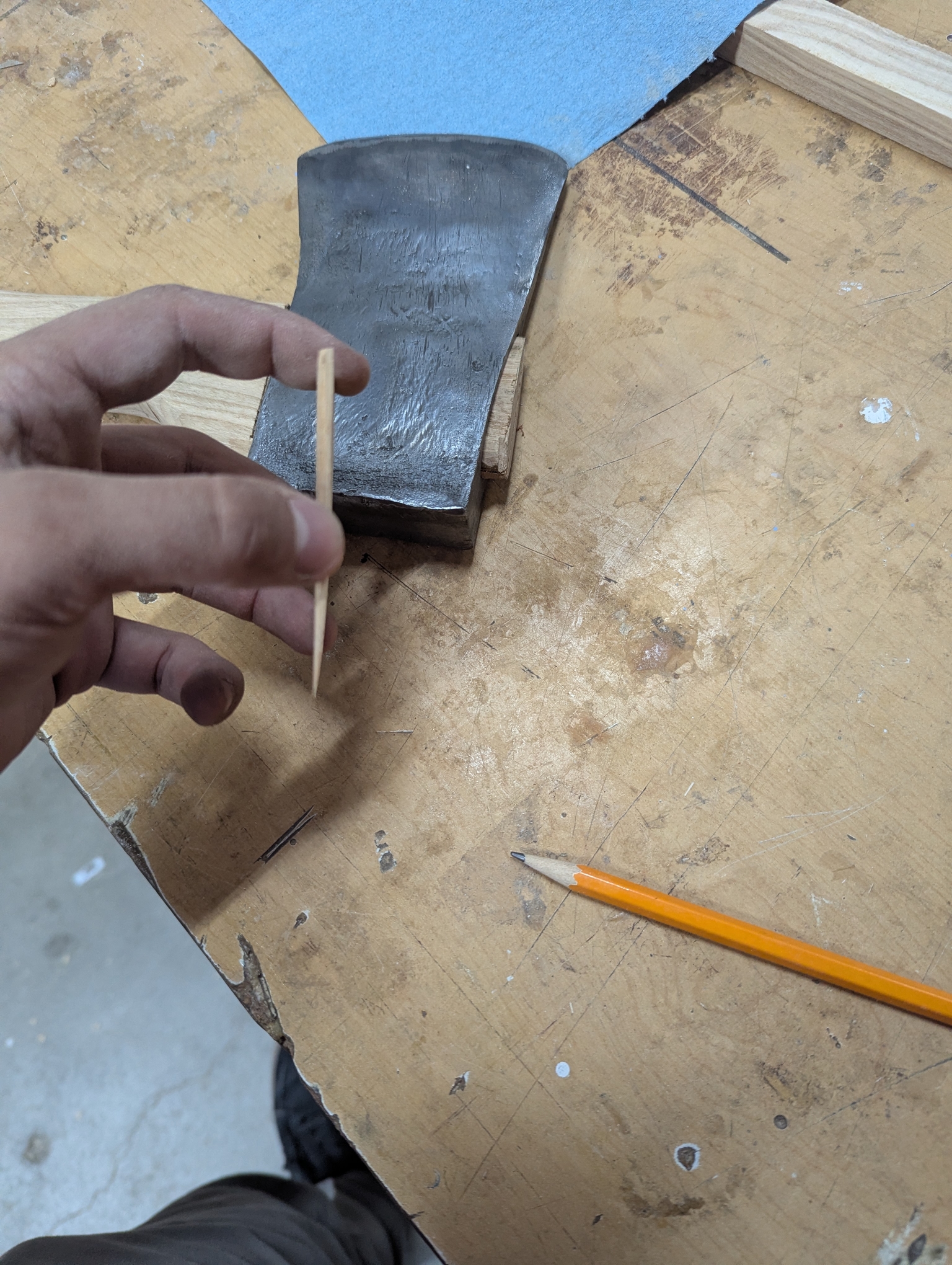
Finally, I split the eye with the bandsaw, sanded down a wedge, and sanded the handle to a smooth 360 grit.
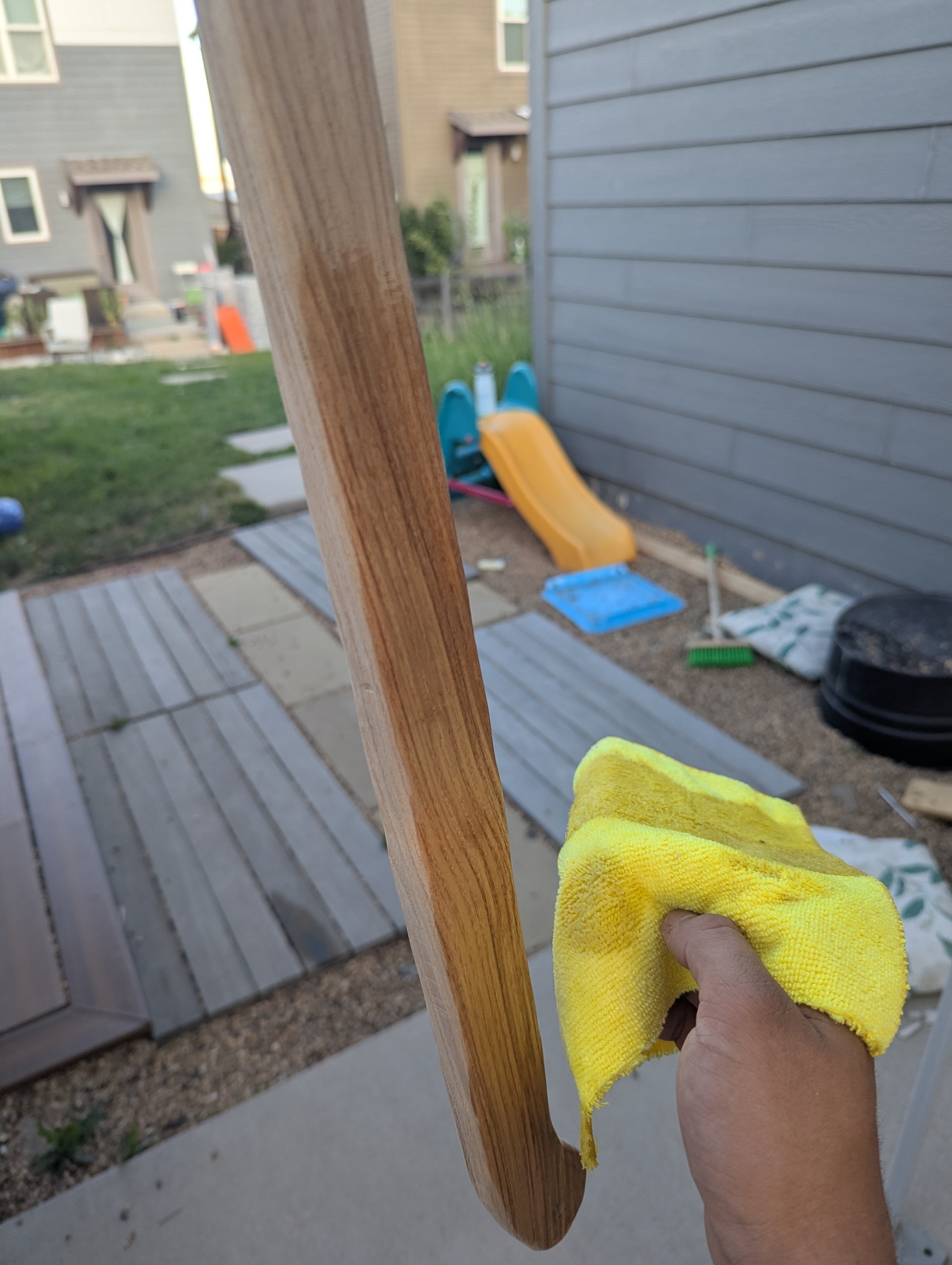
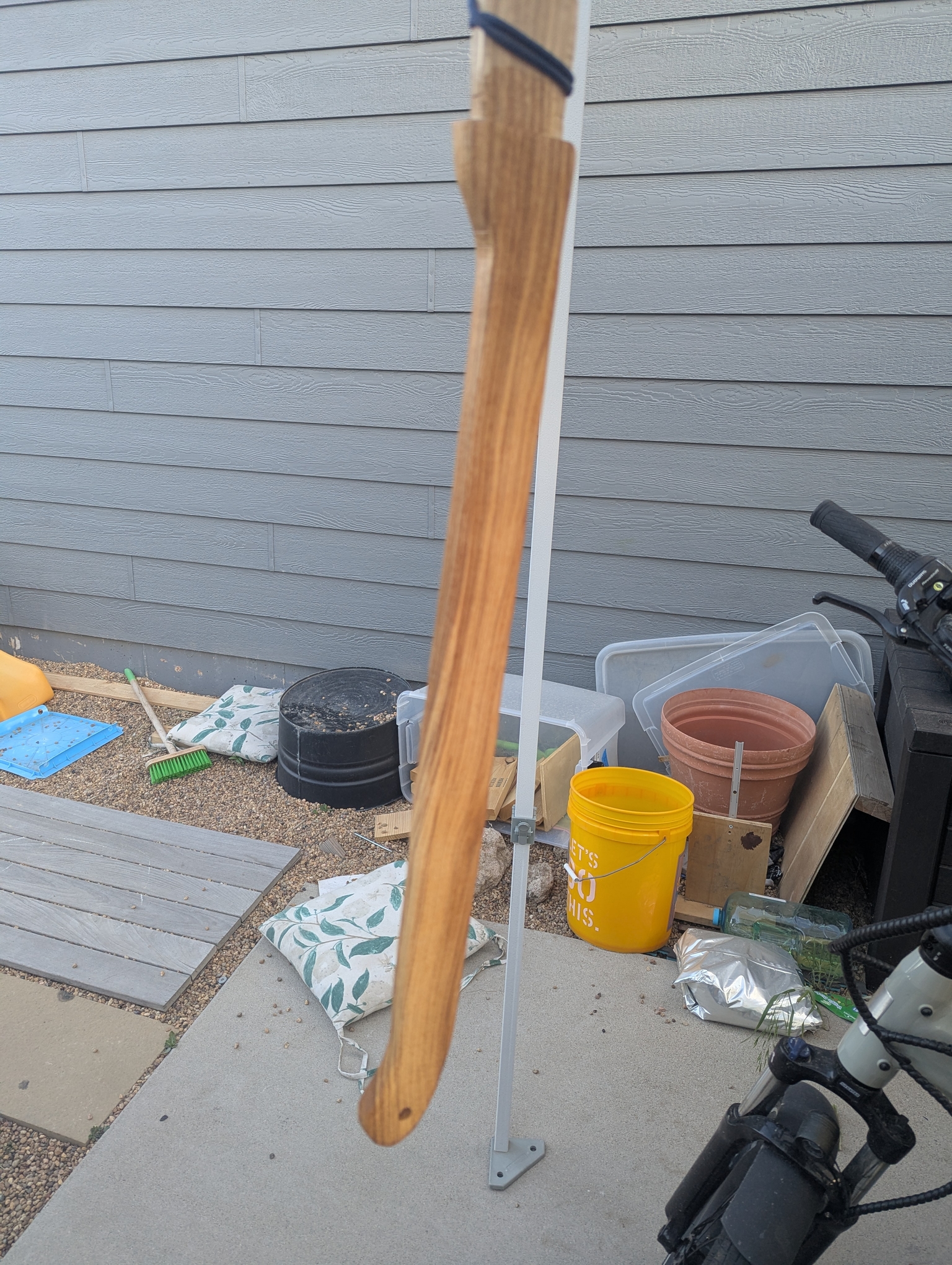
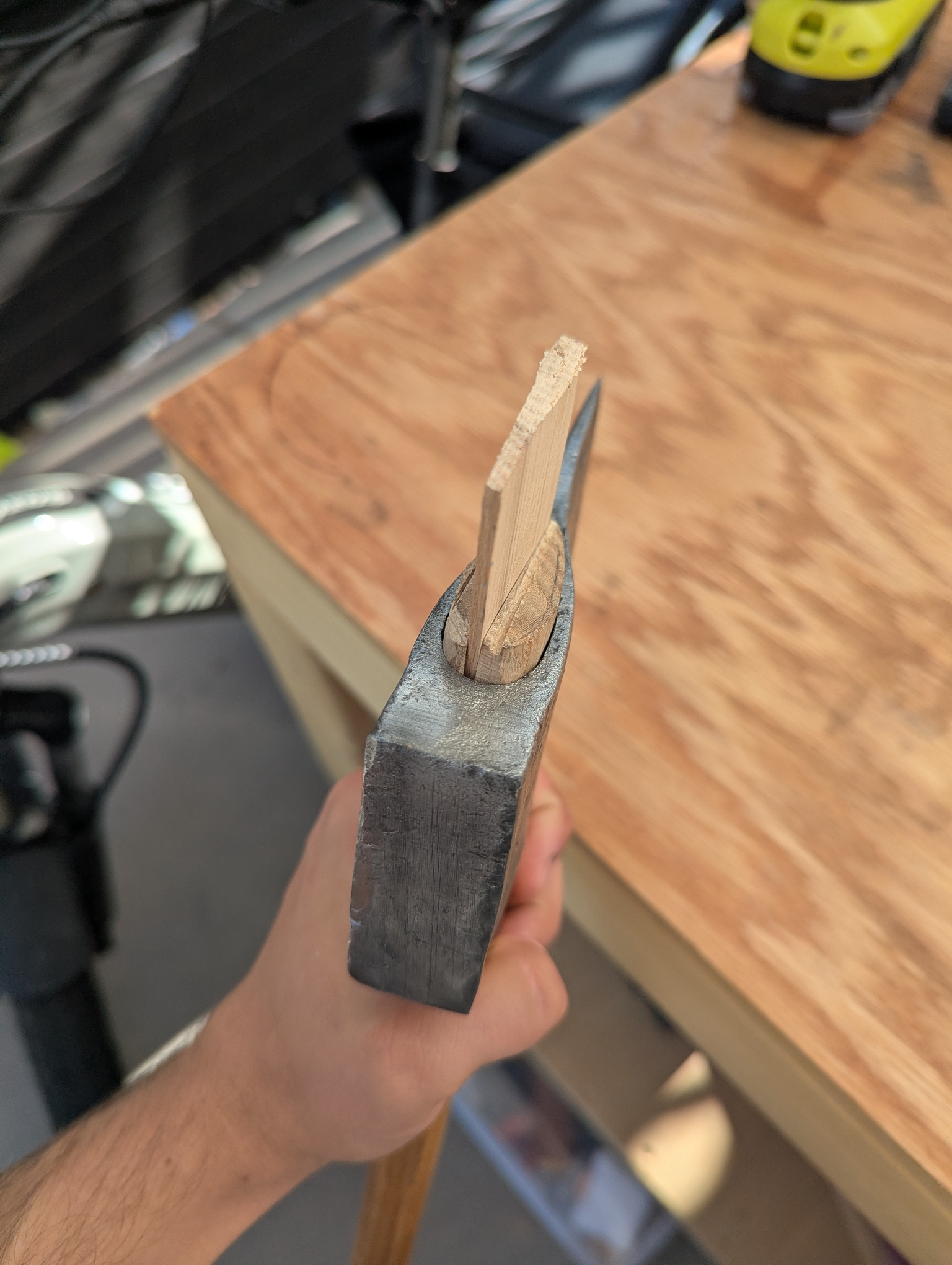
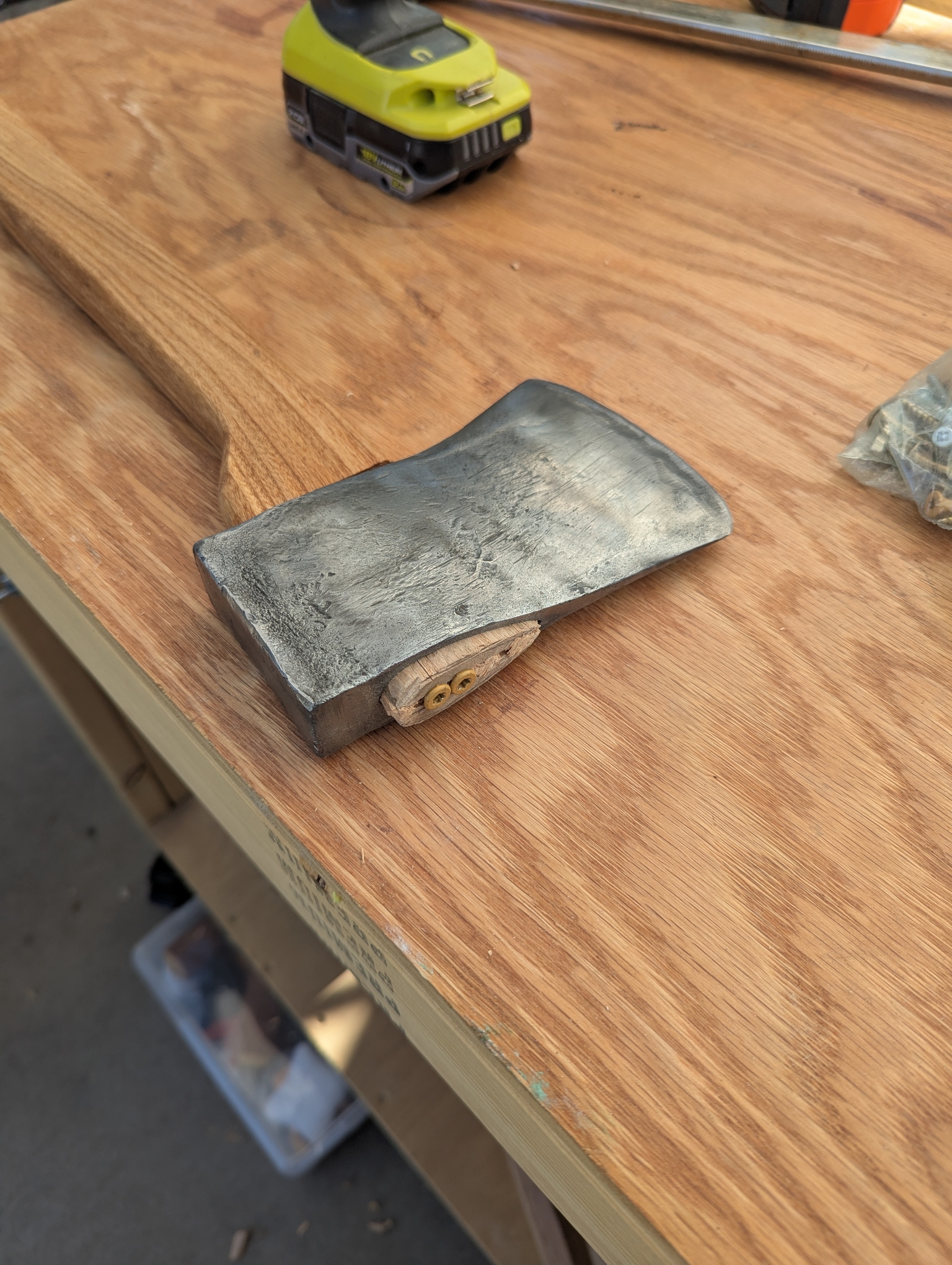
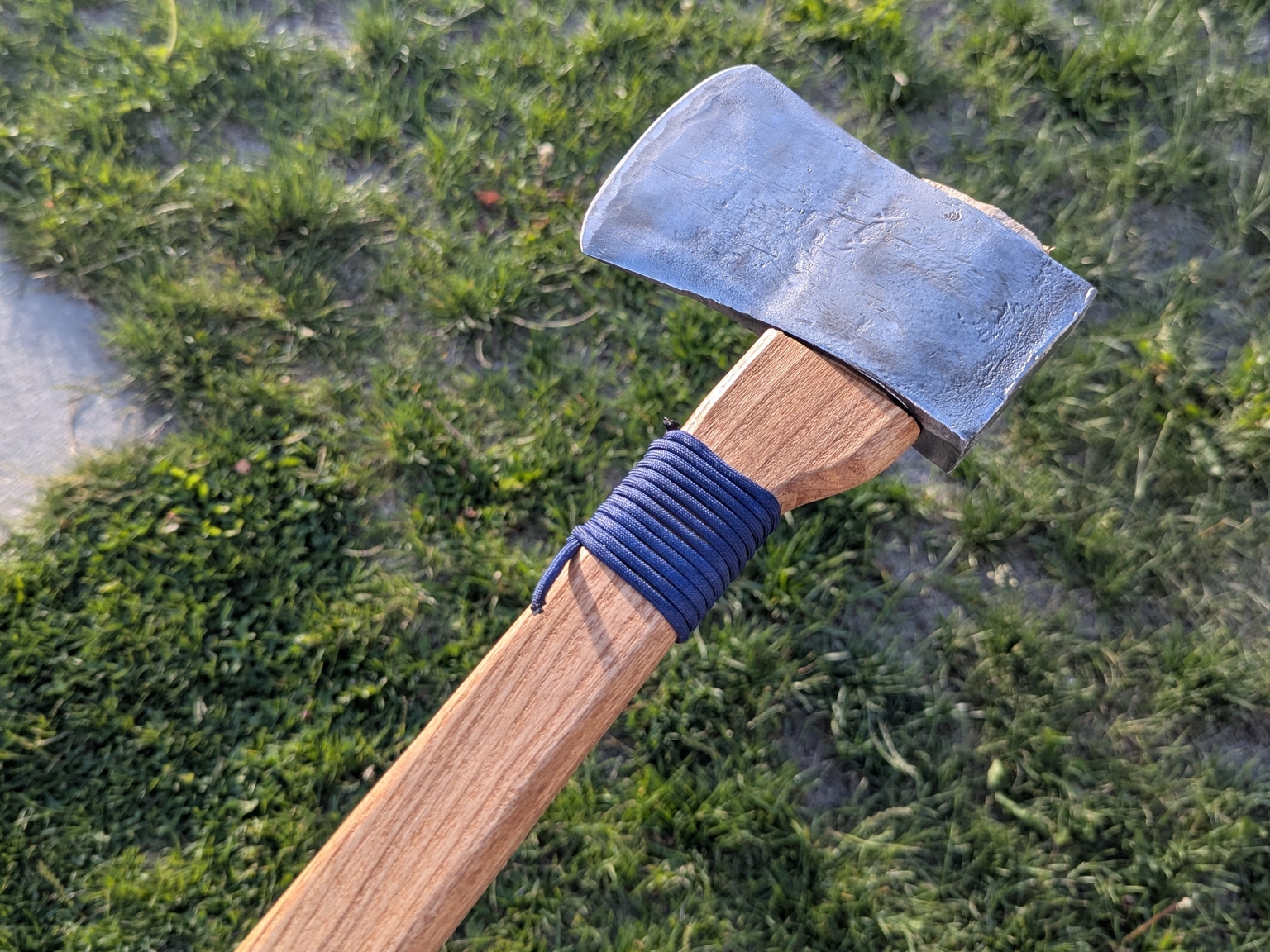
With the handle now home, I strung it up and applied some sealing oil to it. Finally, I hammered in the wedge and added some screws for good measure. After tying a simple paracord grip, my axe was complete!
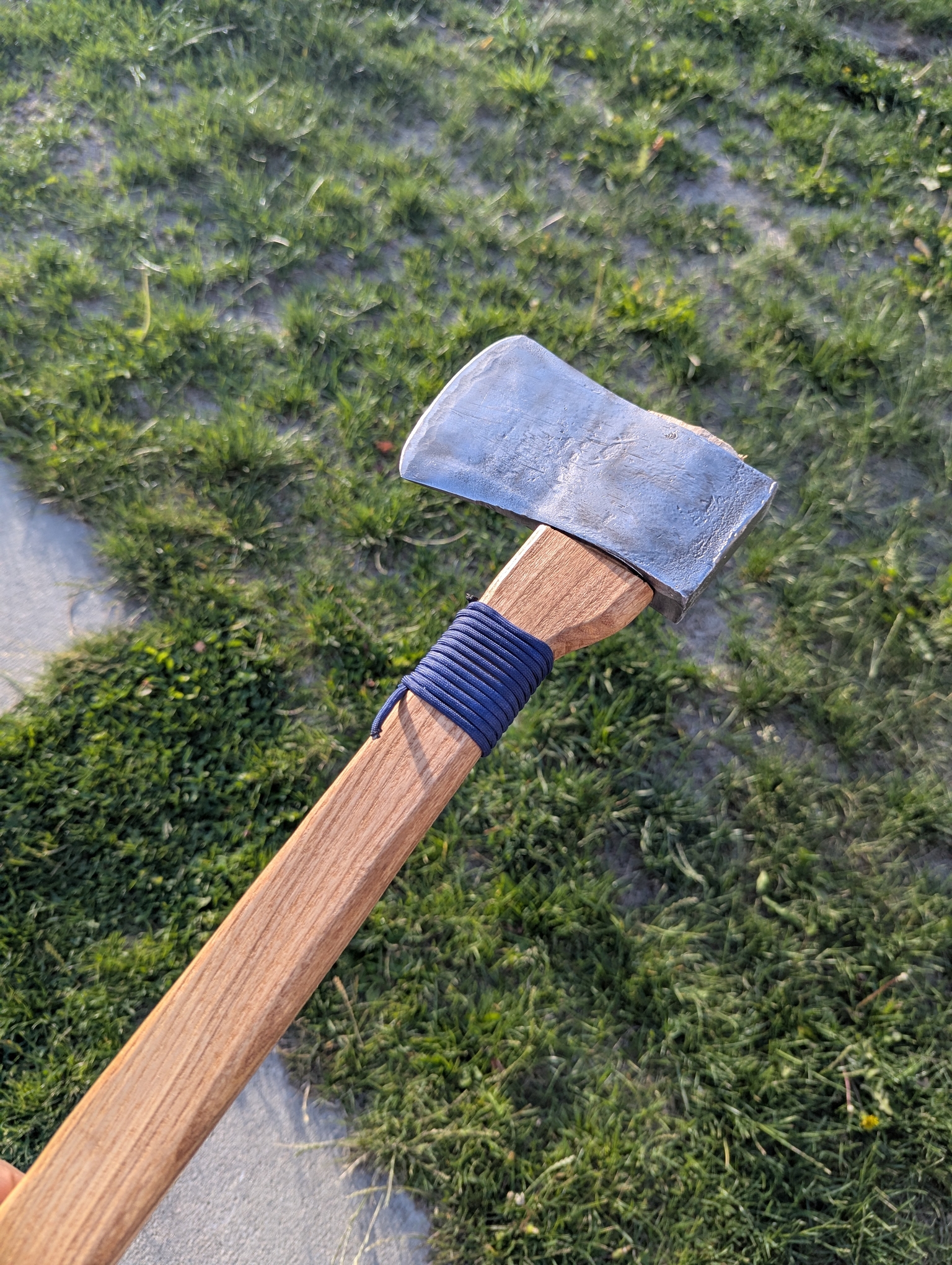
I love restoring broken and useless things. Perhaps it’s because I don’t like the consumerist culture of instantly buying a new <whatever> the second the current one doesn't work as it should, but it’s also at least partially because it’s such a great reminder of the restoration of my life through the gospel. As the prophet Ezekiel gives utterance from God,
And I will give you a new heart, and a new spirit I will put within you. And I will remove the heart of stone from your flesh and give you a heart of flesh.
— Ezekiel 36:26